
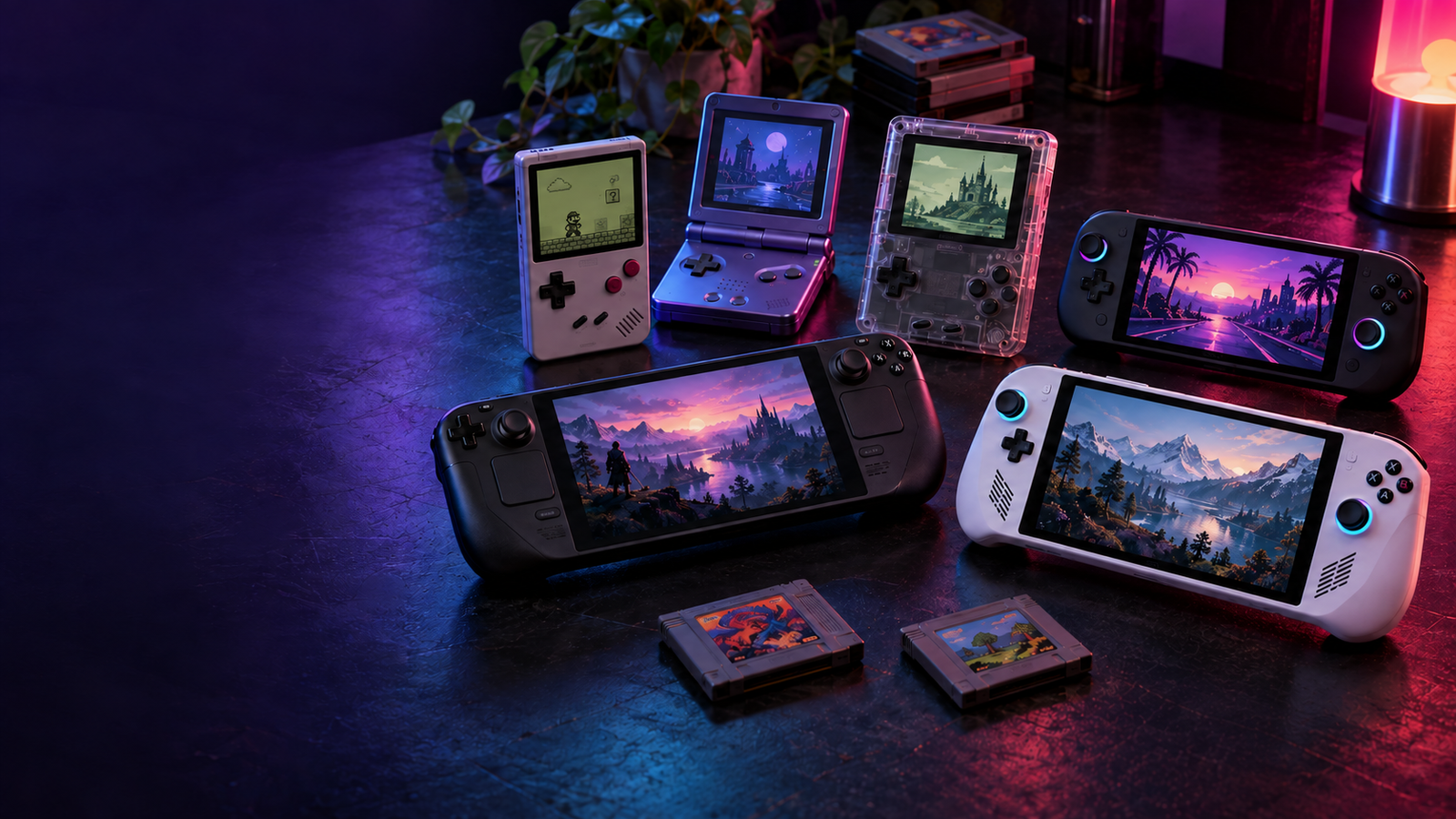
Retro games don't need retro hardware anymore. In 2026, the interesting question isn't whether a handheld can run old games; it's what kind of old-game experience you actually want. A $60 clamshell, an FPGA machine built around original cartridges and a full handheld PC can all play the nostalgia card, but they feel very different once they're in your hands.
NeonGrade verdict
If we were buying one dedicated retro handheld today, we'd start with the Retroid Pocket 5. It reaches well beyond the 16-bit era without turning into a backpack-size handheld PC, and the AMOLED screen gives older games the kind of contrast they rarely had on their original hardware. But if your nostalgia stops around the original PlayStation, spending more can solve problems you don't actually have.
NEONGRADE COMPARES
The six at a glance
Prices are typical manufacturer or retailer ranges in USD; availability and regional pricing can change. Emulation performance also varies by game and emulator configuration.| Handheld | Price range | Display | Size | Strongest emulation generation | OS / platform | Best for |
|---|---|---|---|---|---|---|
| Retroid Pocket 5 | $209–$249 | 5.5-inch 1080p AMOLED | 199 × 78 × 15.6 mm | GameCube / PS2 (select titles) | Android | One versatile dedicated retro handheld |
| Analogue Pocket | $239.99 | 3.5-inch 1600 × 1440 LTPS LCD | 149 × 86 × 22.9 mm | GB / GBC / GBA via original carts | FPGA / cartridge hardware | Collectors and original cartridges |
| Anbernic RG35XX SP | $59–$89 | 3.5-inch 640 × 480 IPS | 89 × 85 × 27 mm | PlayStation-era systems | Linux | A budget clamshell |
| Miyoo Mini Plus | $55–$75 | 3.5-inch 640 × 480 IPS | 108 × 78.5 × 22.5 mm | PlayStation-era systems | Linux / OnionOS | Everyday pocket carry |
| Steam Deck OLED | $789–$949 | 7.4-inch 1280 × 800 OLED, 90Hz | 298 × 117 × 50 mm | Sixth generation and beyond (varies) | SteamOS / Linux | Retro games plus a PC library |
| ROG Ally X | Around $799 | 7-inch 1080p IPS, 120Hz | 280 × 111 × 24.7 mm | PS3 / Switch-era (varies) | Windows 11 | Maximum Windows flexibility |
1. Retroid Pocket 5 — Best Retro Handheld Overall
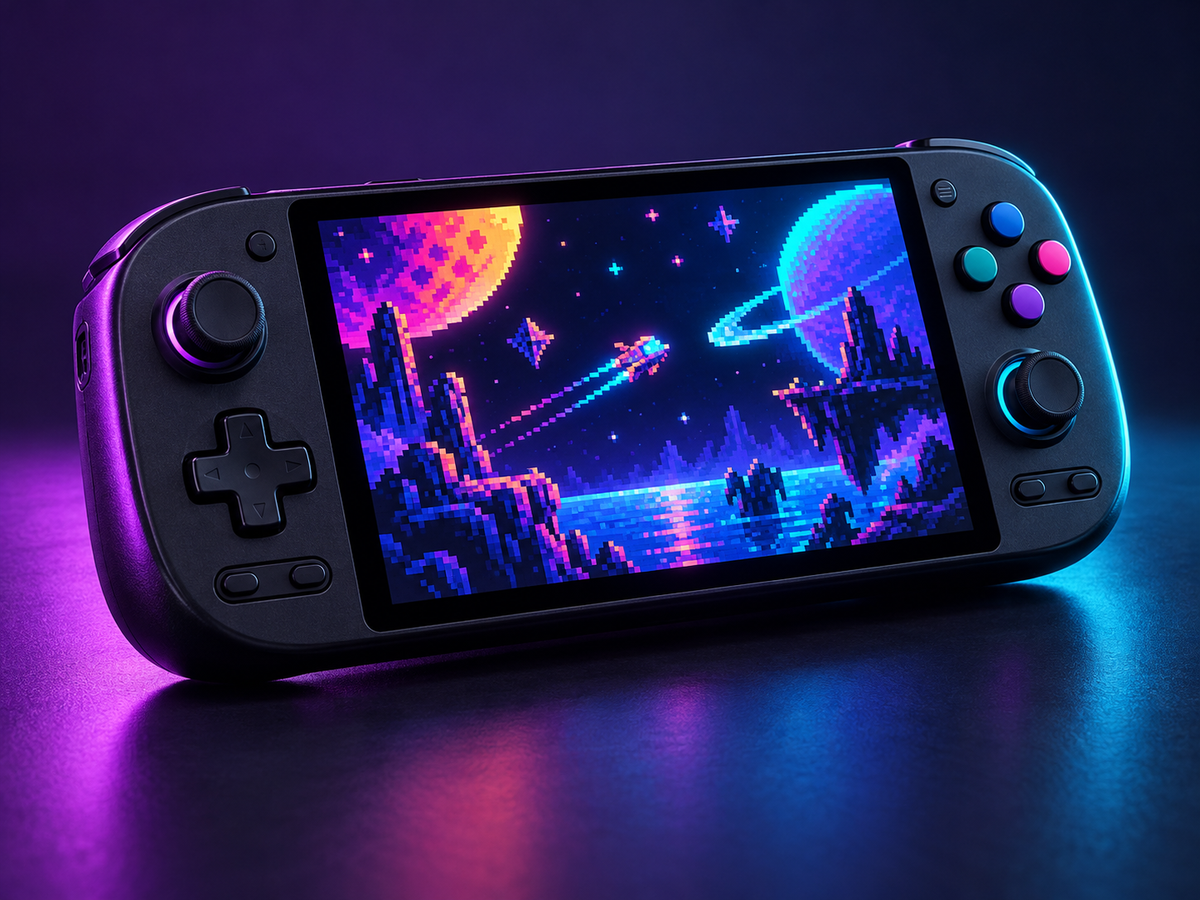
AI-generated editorial illustration; product appearance may differ from the actual device.
The Retroid Pocket 5 sits in a useful middle ground. It is still small enough to feel like a dedicated games machine rather than a compact PC, but its 5.5-inch 1080p AMOLED panel gives pixel art deep blacks and makes early 3D games look cleaner than you may remember them. More importantly, there is enough performance here to keep exploring after the 16-bit comfort zone runs out.
The catch is setup. Android gives you plenty of emulator choices, but it also gives you controller profiles, graphics settings and the occasional game that needs its own tweak. GameCube and PlayStation 2 are not a single compatibility checkbox. Get everything dialed in, though, and the Pocket 5 covers an unusually broad slice of gaming history without asking you to carry something the size of a Steam Deck.
2. Analogue Pocket — The Luxury Choice for Original Games
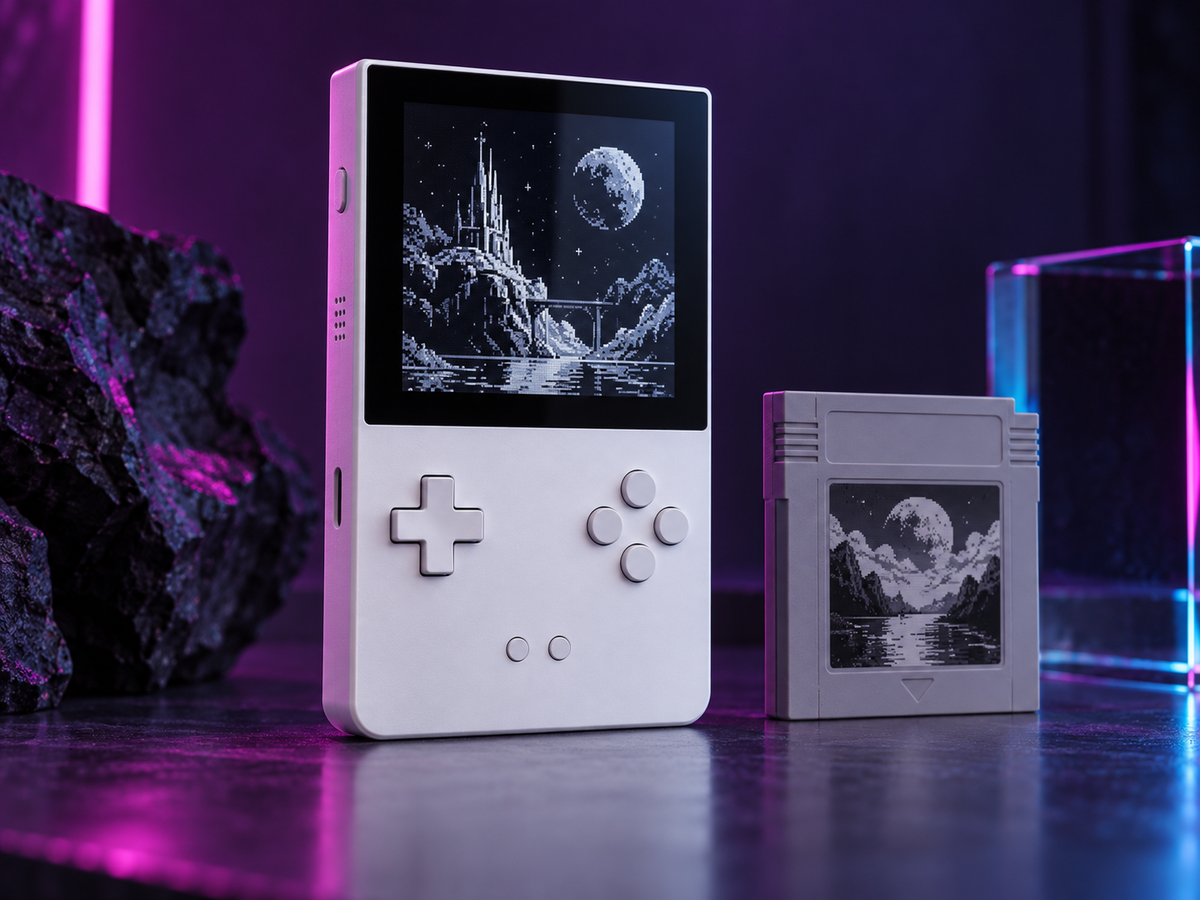
AI-generated editorial illustration; product appearance may differ from the actual device.
The Analogue Pocket is the odd one out here, and that's exactly why it is interesting. Slide an original Game Boy cartridge into the back and the experience feels closer to using beautifully over-engineered Nintendo hardware than launching another emulator. Its 3.5-inch 1600 × 1440 display is almost comically sharp for games designed around a 160 × 144 Game Boy screen, while its display modes can bring back some of the character of the original panels.
Value isn't really the point. You can play many of the same games for far less money elsewhere. What you're paying for is the ritual of physical cartridges, FPGA hardware, the industrial design and a screen that treats thirty-year-old handheld games as if they deserve premium hardware. For the right collector, that distinction matters.
3. Anbernic RG35XX SP — Best Budget Clamshell
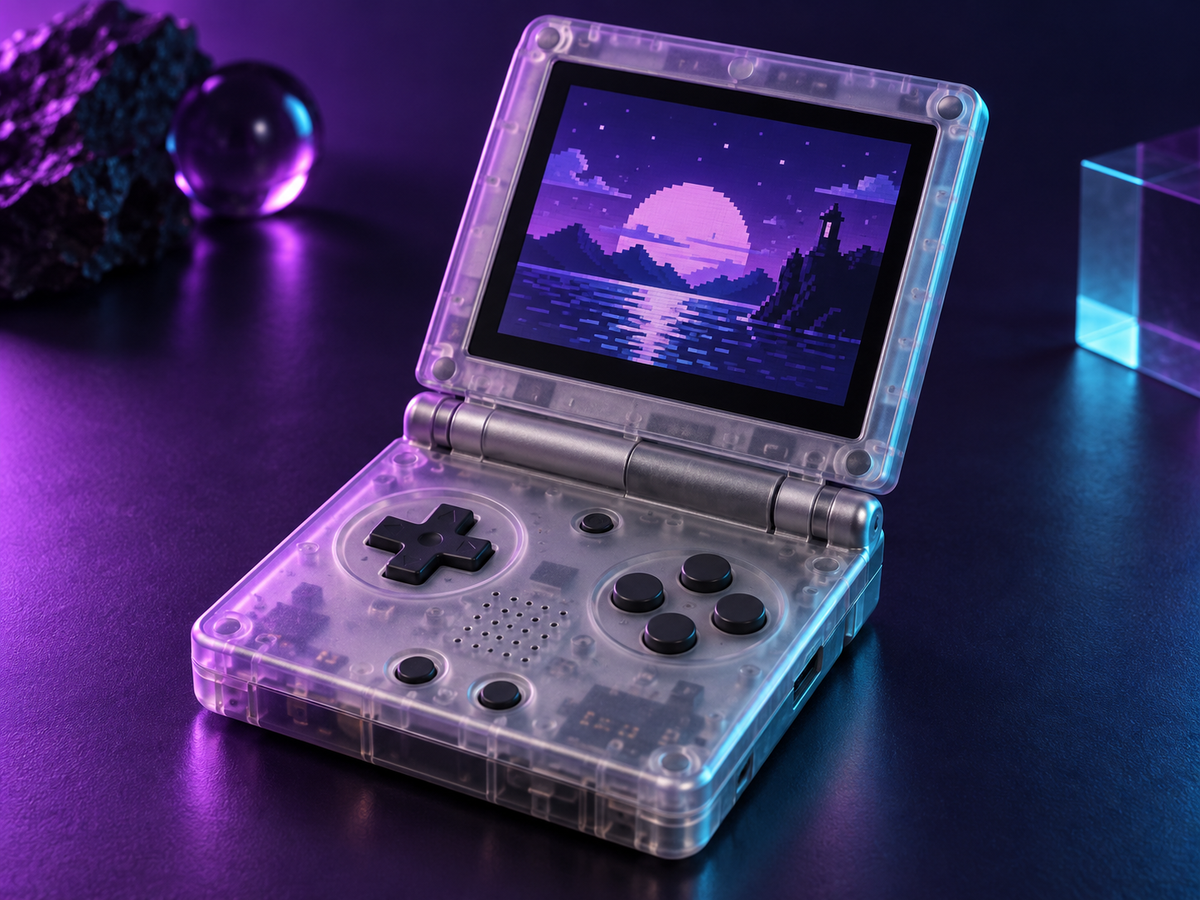
AI-generated editorial illustration; product appearance may differ from the actual device.
Open the RG35XX SP and the reference is obvious: this is the Game Boy Advance SP formula brought back for the emulation era. The clamshell is more than nostalgia, too. Close it, throw it into a bag and the screen is protected without a case. For 8-bit, 16-bit and original PlayStation games, that's a more meaningful everyday advantage than another page of processor specifications.
4. Miyoo Mini Plus — The One You'll Actually Carry
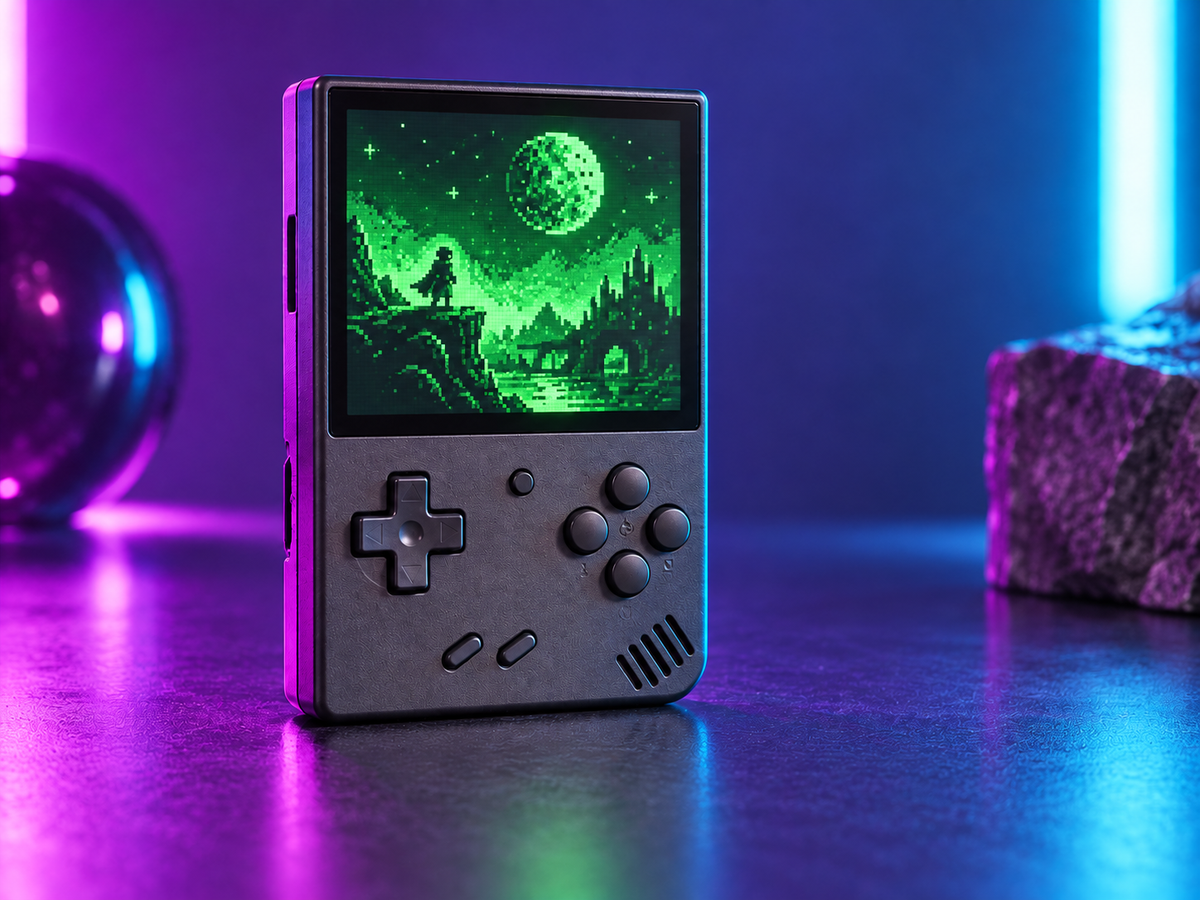
AI-generated editorial illustration; product appearance may differ from the actual device.
Put the Miyoo Mini Plus next to a Steam Deck and the spec sheet looks almost comical. Then put the Miyoo in a jacket pocket and play ten minutes of a Game Boy or 16-bit game, and its entire argument starts to make sense. The vertical shape suits older games, the hardware is modest but sufficient for its target systems, and community software such as OnionOS turns it into a surprisingly tidy little library. This is the handheld you're more likely to have with you when you actually have fifteen minutes to play.
5. Steam Deck OLED — Best for Retro Gaming and Modern PC Games
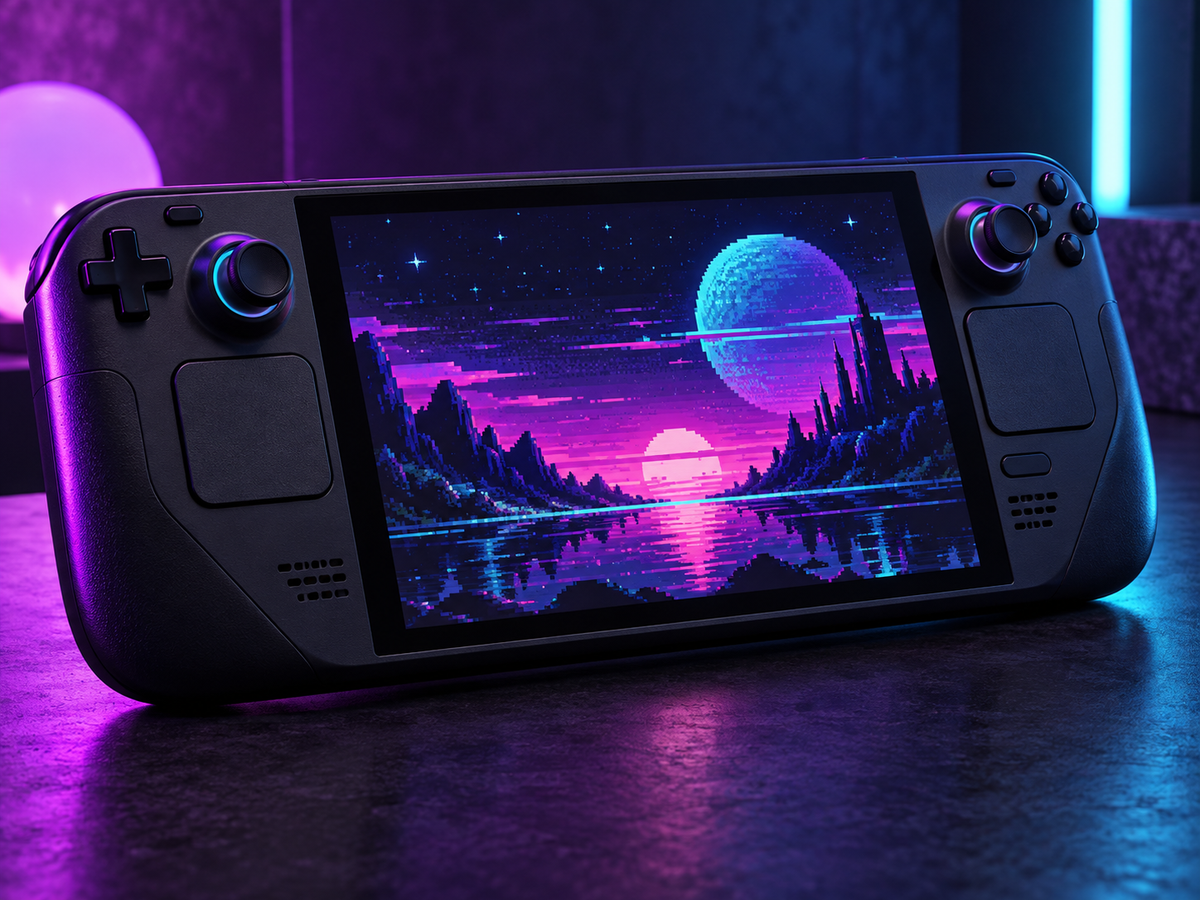
AI-generated editorial illustration; product appearance may differ from the actual device.
The Steam Deck OLED is almost overqualified for this list. Retro games are only one corner of what it does, but the large OLED panel is excellent for pixel art and console games that were originally meant for a television. It also gives you a modern Steam library on the same machine. The trade-off becomes obvious the moment you pick it up: compared with a Miyoo or RG35XX SP, the Deck feels enormous. Think backpack rather than jacket pocket.
6. ROG Ally X — Best Windows Retro Powerhouse
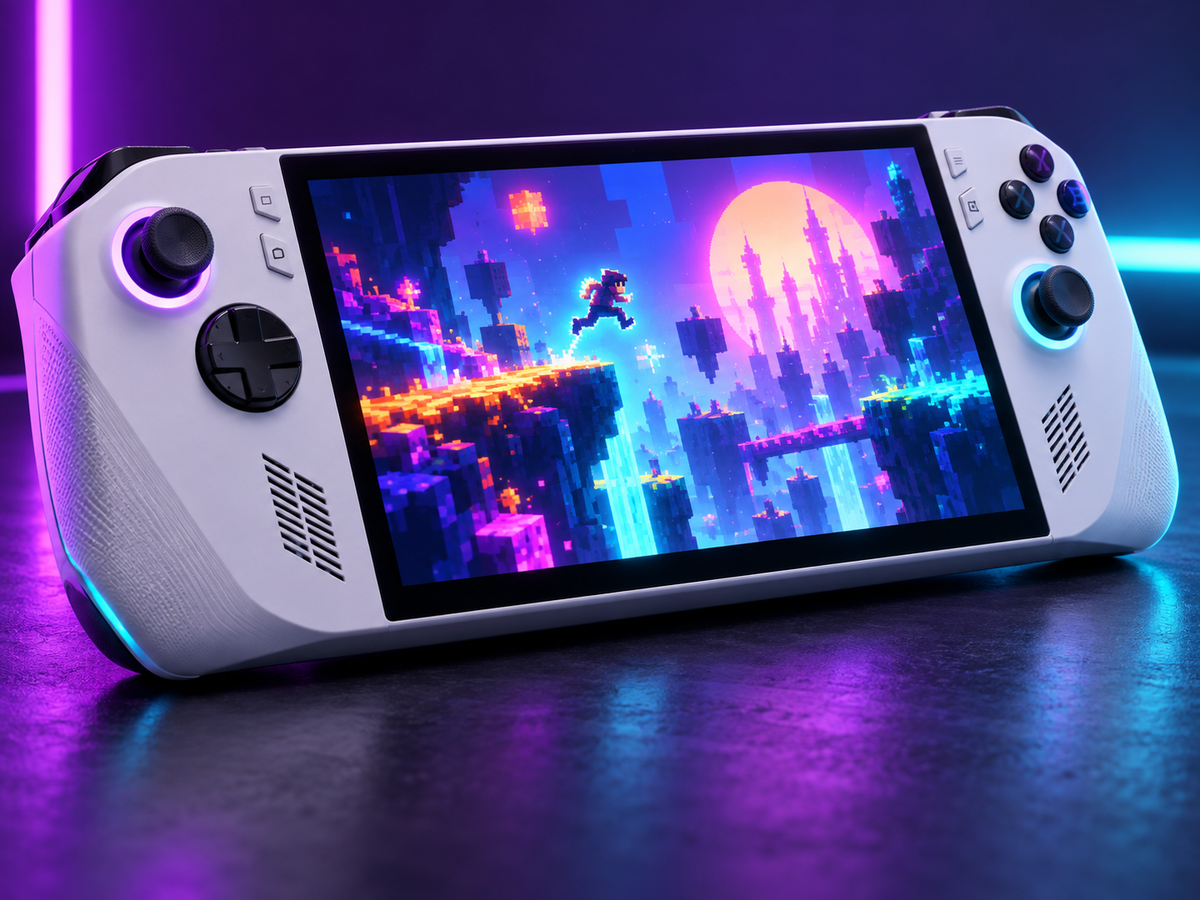
AI-generated editorial illustration; product appearance may differ from the actual device.
The ROG Ally X answers the emulation question with horsepower and Windows. That combination opens an enormous ecosystem of emulators, launchers and PC games and gives demanding systems more room to breathe. The catch is, well, Windows. A desktop operating system on a seven-inch touchscreen still occasionally behaves like a desktop operating system on a seven-inch touchscreen. Once a game is running, the flexibility is excellent; getting there isn't always graceful.
Which retro handheld should you actually buy?
Start with the games, not the hardware. If the systems you return to most live between the NES and original PlayStation, an RG35XX SP or Miyoo Mini Plus already covers a lot of ground and disappears into a pocket far more easily than the expensive machines here. Move into more demanding 3D systems and the Retroid Pocket 5 becomes the interesting step up. If opening a drawer of original cartridges is part of the pleasure, the Analogue Pocket is playing a different game entirely. And if retro is only half the plan, the Steam Deck OLED and ROG Ally X make more sense because they also earn their space with modern PC games.
A note about ROMs and emulation
Emulators are widely available, but copyright law around game ROMs varies by jurisdiction. Buying an emulation handheld does not automatically grant the right to download commercial games from unofficial ROM sites. NeonGrade evaluates the hardware and its emulation capabilities, not sources for copyrighted game files.
FAQ: Retro Gaming Handhelds
What is the best retro gaming handheld in 2026?
For most enthusiasts who want a dedicated emulation handheld, we'd choose the Retroid Pocket 5 because its size, AMOLED display and performance cover a particularly useful middle ground. If you mainly play earlier systems, cheaper handhelds can be the smarter fit.
What's the best handheld for Game Boy games?
If you still own original cartridges, the Analogue Pocket is the most distinctive option: its FPGA hardware and unusually sharp display are built around that experience. If you're using software emulation instead, the Miyoo Mini Plus and RG35XX SP get you into Game Boy-era libraries for much less money.
Is a Steam Deck worth buying just for emulation?
Probably not if emulation is the only job you have for it. The Deck earns its size and price more convincingly when you also want a portable Steam library. For older console generations alone, smaller dedicated handhelds are easier to carry and considerably cheaper.
Retro handhelds have become powerful enough that raw performance is no longer the most interesting part of the buying decision. The machine that wins is usually the one whose size, screen and little everyday compromises make you want to pick it up again tomorrow.